

What Strategy Type Are You?
I used to think a good strategy meant thinking from A to Z.
I wanted to see the steps, anticipate what could go wrong, and know how I would get from where I was to where I wanted to be.
I’m not sure I believe that anymore.
The more comfortable I’ve become with ambiguity, the more I’ve started to think about strategy differently. Strategies are tools. And different kinds of uncertainty call for different tools.
Sometimes you need a blueprint. Sometimes a roadmap. Sometimes a framework. And sometimes you only need a bridge from where you are to what you can see from here.
Which made me wonder: What strategy type are you?
Try this with a challenge you’re facing right now. It’s ambiguous, there’s uncertainty, and you don’t have all the information yet. Which strategy type would you reach for first?
Blueprint

Blueprints give you a structure before you begin.
Approach: I need to understand how this will work.
Best used when: Sequencing and dependencies matter.
Trap: Trying to engineer certainty before moving.
Roadmap
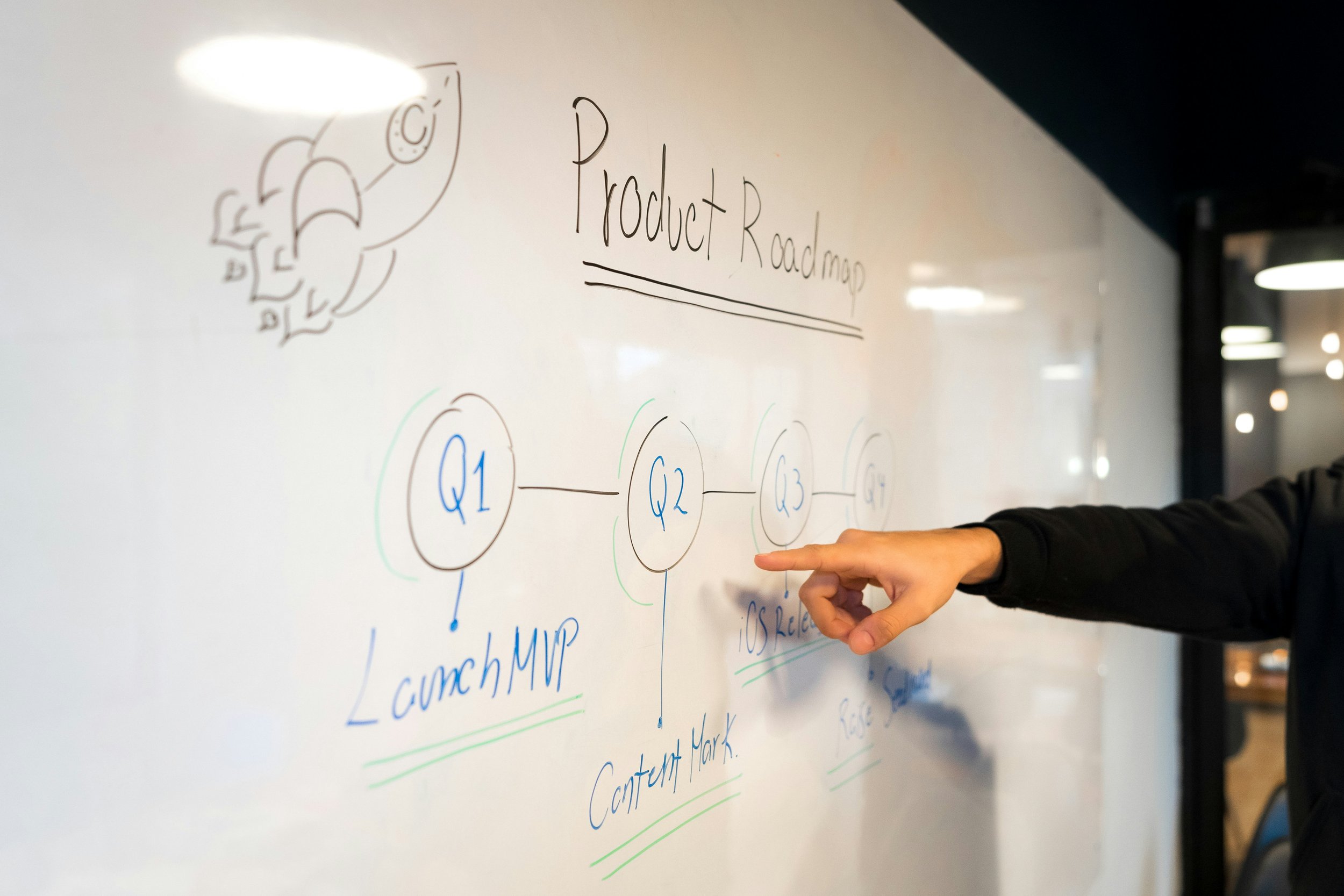
Roadmaps make the path ahead visible.
Approach: I need to see where I’m going.
Best used when: Direction matters more than knowing every step.
Trap: Becoming attached to the route before you know what you’ll encounter.
Framework

Frameworks provide structure while leaving room for what takes shape within it.
Approach: I need enough structure to make decisions as I go.
Best used when: Conditions are likely to change and you need room to adapt.
Trap: Creating so much flexibility that nothing anchors your decisions.
Bridge

Bridges get you from where you are to what you can see from here.
Approach: I need to get from here to what I can see from here.
Best used when: You know enough to move, but not enough to map the destination.
Trap: Building for what you can see without staying curious about what comes next.
Each of these approaches can get you moving in the face of uncertainty. Because when uncertainty gets too high and we don't have enough structure, it's easy to stay stuck. (Related: 8 Remedies You Need to Move Forward When You’re Stuck.)
Even a small action, like choosing the strategic approach that fits the situation, can create forward movement.
The strategy isn't the plan. The strategy is knowing how much structure you need to make the next good move.