

8 Remedies You Need to Move Forward When You’re Stuck
Summary
Feeling stuck can reinforce procrastination, overthinking, and inaction. These eight practical remedies can help you recognize the pattern, shift your perspective, and begin moving forward.
The “Feeling Stuck Loop”
Feeling stuck is frustrating because it often creates the illusion that nothing is changing. Over time, that feeling can turn into procrastination, overthinking, avoidance, and self-doubt. The good news is that once you recognize the patterns keeping you stuck, you can begin replacing them with habits that create momentum.
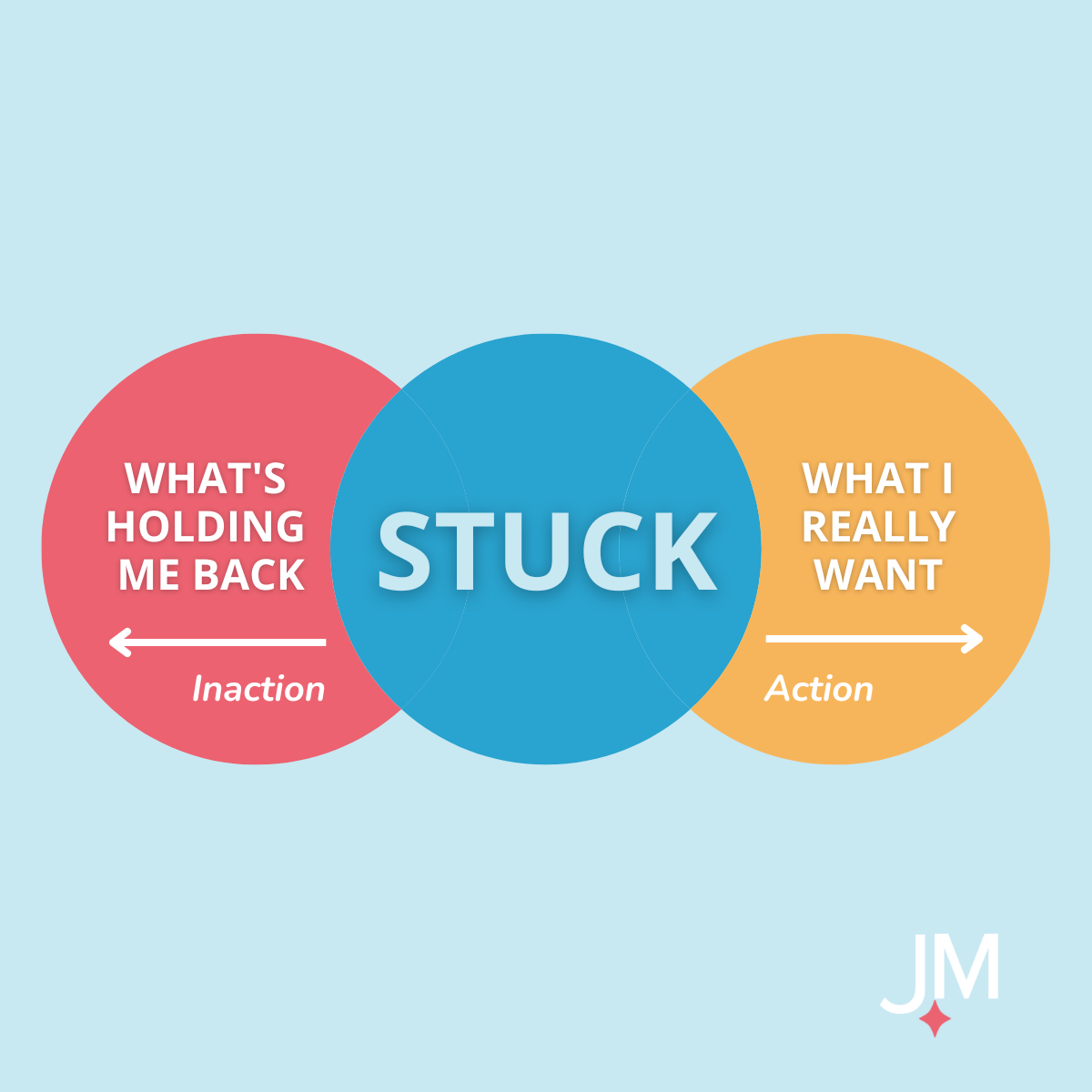
The “Feeling Stuck Loop”
Are you having difficulty getting unstuck?
When these motivation-like symptoms last months, even years, you're in self-development territory. You may even have developed habits that get in the way of you achieving and progressing on your goals.
Feeling stuck often means you need clarity, not more pressure. Learn how True North coaching can help you identify what matters and move forward.
8 Habits That Keep You Stuck
1. Procrastination (also known as "kicking the can down the road"). You stall and come up with excuses every time you’d like to make progress. You push off working on your goals and keep setting new targets into the future.
2. Distraction. I call these “busy widgets.” You know, those things that you do to keep you occupied in meaningless ways to march in the opposite direction from where you’re going.
3. Avoidance. Are you ignoring or turning away from difficult work ahead? Although avoidance is a type of action, it’s not one that moves you forward. A great example would be having difficult conversations.
4. Complacency. How many times have you compromised what you really want? Settling for something less means staying far too long in your comfort zone. It can also mean tolerating the status quo.
5. Negative Self-Talk. You know exactly what this sounds like, and it’s not pretty. Does your inner critic get in the way of you reaching your next level?
6. Blaming. Are you taking responsibility for your actions? We can not control the actions or perceptions of others, but we can manage how we respond.
7. Overthinking. We all know that you know you have analysis paralysis. It’s when you spend time and energy looking into endless research areas, and then you do another lap organizing that information and so on. It’s when all the possible scenarios need to be played out. It’s when you spend all the time available working through the thoughts in your head.
8. Perfectionism. What happens when your ideal, perfect scenario is doomed not to happen? You may be saying things like, “as soon as” often. Striving for perfect when getting started will only leave you with experiencing all of the previous seven habits above.
Reading this, you likely are aware of the ways you’re holding yourself back. Thank goodness for self-awareness. Once you’re aware, then you can do something about it. While these habits developed over many years, you can start to shift your perspective starting now.
Clarity creates movement.
8 Remedies to Help You Move Forward
1. Take Small Actions. Write it down, talk it out with yourself or others. Taking action doesn’t always have to be about big, bold moves. It can be the smallest thing that helps you reflect on your goals. I’ve not met anyone who hasn’t felt better after taking small action.
2. Let Go. We often take a productivity-focused view of moving forward. We are made to believe we need to add something to achieve our goals. A remedy for this hustle and grind mentality is asking yourself, What do I need to let go of?”
3. Make a decision. When you’re on the fence about something, making a decision may be the next action to take. Use values-based decision making, and ask yourself, “What have I already decided?” Repeat this question several times to get to clarity.
4. Learn. The remedy for complacency is knowing what you really want. And yes, that means learning what’s at the edge of your comfort zone. Ask, “What do I really want?”
5. Choose Inner Wisdom. If you’re an overthinker or perfectionist, you probably can’t get enough of the idea that this is another voice you could dial into. It’s your inner wisdom - the other voice in your ear giving you positivity and encouragement like an elder person in your life.
6. Take ownership. It’s so important that I’ll say it again. We can not control the actions or perceptions of others, but we can manage how we respond. The moment you take ownership or responsibility for your contribution to a challenge, it’s the moment you commit to doing something new to move forward. Unfortunately, many of us take ownership when we reach a tipping point or burnout. However we reach this milestone, this is the biggest admission that it is time to change.
7.Set Intentions. When overthinking runs amok, zoom out to look at the bigger landscape around you. Setting intentions can be more powerful than the goal itself. It’s the shortcut thing you want. It’s your WHY, and what’s in it for you. See related post: Goodbye SMART goals: Simplify your goal setting in 3 easy steps
8. Iterate. The best way to navigate your perfectionism is to iterate. Start somewhere. Start with a rough, terrible draft. Then improve it. Do that several times and iterate your way to good enough instead of perfect.
We spend a life-time learning and unlearning ourselves. Feeling stuck may never go away completely, but as part of the self-development path we’re on, we iterate and improve.
Before you leave, ask yourself one question:
Which remedy are you ready to practice this week?
Lasting change rarely comes from doing everything differently. It often begins with one small action.
Ready to move forward?
You do not need the whole plan. You may only need help identifying the next true step.
Frequently Asked Questions
How do I get unstuck when I don’t know what I want?
Start with one small action instead of trying to solve everything at once. Writing down what you know, naming what is not working, or talking it through can create enough clarity for the next step.
Why do I feel stuck and overwhelmed at the same time?
Feeling stuck often creates mental overload because you are holding too many options, worries, or unfinished decisions at once. Reducing the problem to one decision or action can help restore momentum.
How can I stop overthinking and start moving forward?
Set an intention, choose a small next step, and treat it as an experiment rather than a permanent decision. Progress often comes from iteration, not certainty.