


Learning happens in the doing, reviewing, and trying again.
My daughter brings home her graded assignments every week. They're usually essays or worksheets in English or math, with a score at the top and a sticker or smiley face drawn next to "excellent" or "fantastic!" They make me think. When we were in school, we put pencil to paper to work through what we learned, repeating exercises and correcting our approach along the way.
Sometimes it was an essay assignment, sometimes it was a math or spelling challenge on the board. Maybe it was even reading aloud in front of the class. We had these practice tools across a range of subjects, and later on they became computer or science labs too.
As adults, we rely on our big thinking minds and expertise much more often. When work feels difficult or unfamiliar, we can assume we're missing some special knowledge or shortcut. We want the speed of a finished result without necessarily wanting the process.
What if our goal wasn't to always complete work assignments quickly, but to create more ease the next time we face a similar challenge?
To gain ease, you must experience the mechanics.
A shortcut might produce a result faster, but it doesn't necessarily develop the understanding needed to repeat it. The mechanics aren't an inconvenience at all. They're how our capability develops.
Here are some examples I know will be relevant for you:
Ambiguous project work: Identify knowns and unknowns, test assumptions through experimentation, revise as good or unexpected results improve your understanding.
Resume review: Take the old resume that was ideal for landing your last position, examine the evidence for how you match the new position you're applying to, shine a spotlight and revise until you can explain your value clearly.
Interview preparation: Consider what questions you might be asked at each interview stage, rehearse an answer aloud or chat with AI, notice where you lose clarity, adjust and rehearse again.
Imagine you had taken the shortcut route for your resume. You hired someone to rework it completely. Great, now what happens when you get selected for an interview and have to defend something written on it? Would you have the muscle memory needed to answer, "Tell me about your career journey?" or "Why are you the best candidate for the role?"
And if you don't know where to start, build your own worksheet. Write down what you know, what questions you have, and what good looks like.
Next time you're faced with learning something you believe might be hard, try not to skip the mechanics. They're what give you the keys to adapting and building resilience for whatever comes your way next.
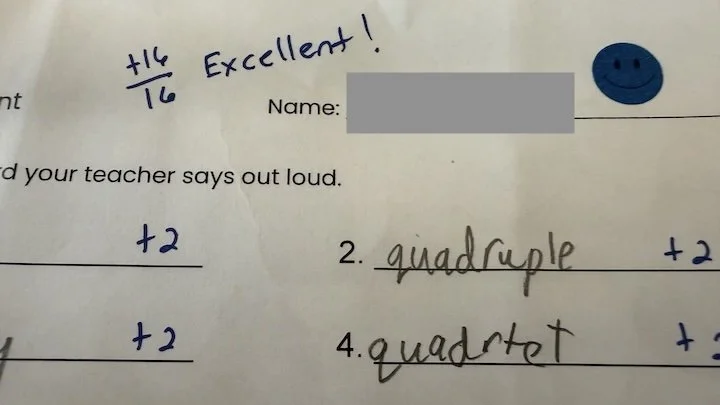
My daughter's homework. The inspiration for this article.